Eligibility first
If ZIP code, city, property type, or service category determines whether the request can proceed, collect and validate that information before a long set of detailed questions.
A useful quote form balances operational qualification with customer effort. The correct structure depends on what the business can price, schedule, and confirm at the moment of submission.
Use precise language for the form result. “Request a quote” indicates that pricing may follow; “Check availability” describes a scheduling decision; “Book service” suggests a confirmed commitment. Headings, buttons, progress labels, and confirmation messages should not imply different outcomes.
If ZIP code, city, property type, or service category determines whether the request can proceed, collect and validate that information before a long set of detailed questions.
Ask for bedrooms, bathrooms, frequency, service type, and material add-ons only when they affect the quote or qualification process. Explain uncommon terms.
Collect the minimum contact information needed to return the requested result. Clearly identify required and optional communication fields.
Service authorization, privacy acknowledgement, and optional promotional email should not be combined into one required checkbox. Optional marketing consent must remain optional.
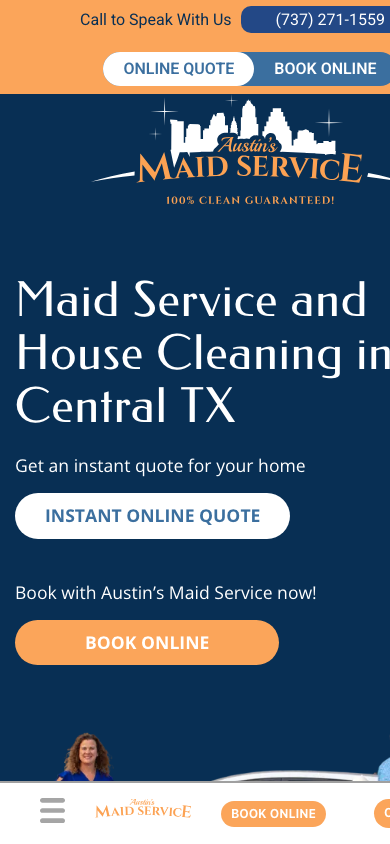
The page should identify the business, relevant service scope, location boundary, and what happens with submitted information. Traceable trust evidence may support the decision, but it should not overwhelm the form or introduce unsupported claims. Where timing is important, state a realistic response expectation rather than an absolute promise the business cannot consistently verify.
A professional recommendation should be testable. Examples include: the selected service persists after a validation error; the mobile submit button remains visible and does not overlap another control; an unsupported ZIP code receives a clear message before detailed fields; and the confirmation page states whether the request is pending review or confirmed.
A public-data audit can verify interface conditions and document implementation targets. It cannot determine private form completion rate, lead quality, or revenue attribution without authorized analytics data, and LeadAuditLab does not request that access for the standard service.
Request the complimentary diagnostic before choosing a paid evidence-led report.